


Music Giants XII: Duran Duran
Music Giants XII Duran Duran
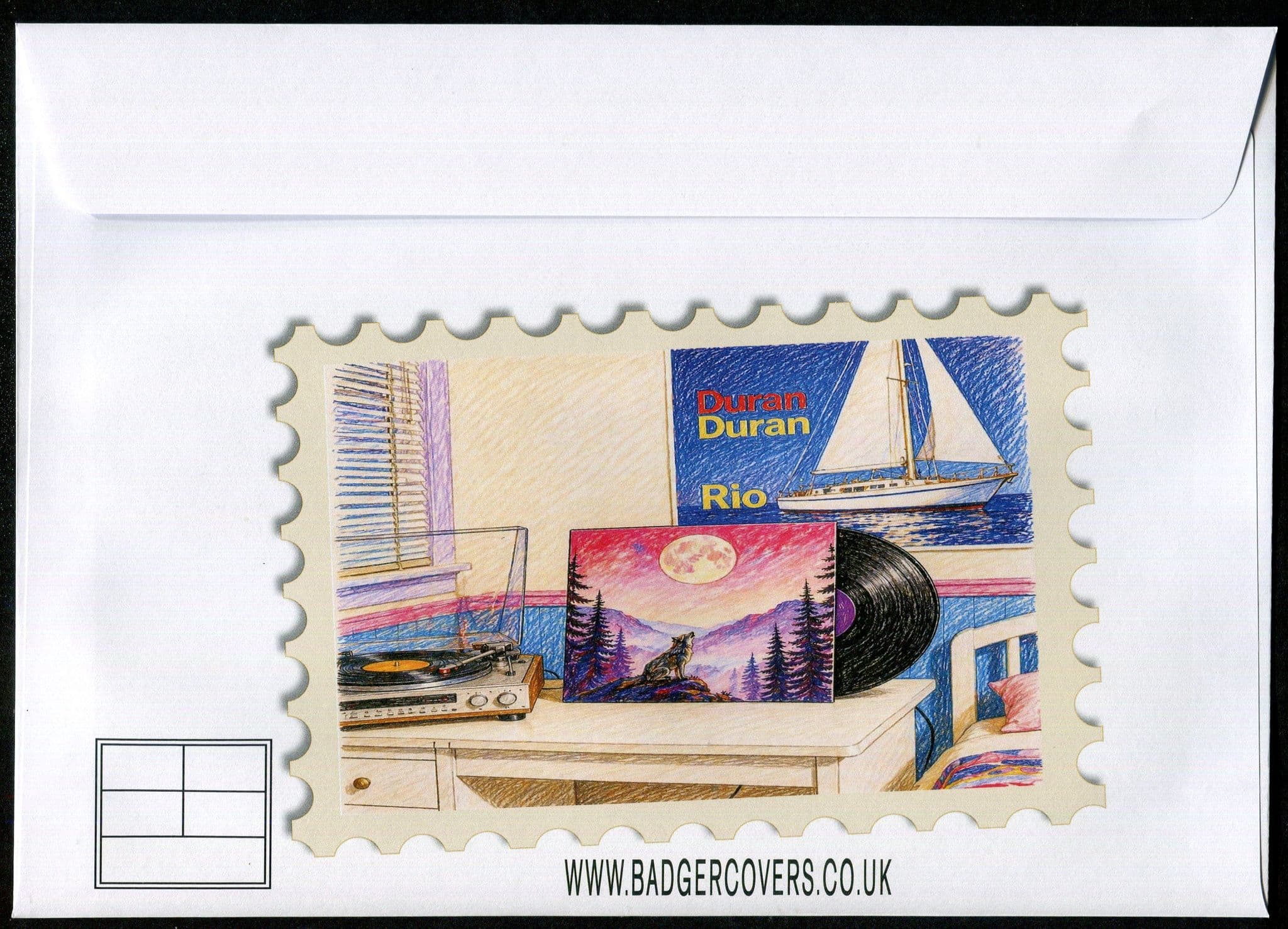
According to Royal Mail..."Few bands have defined the sound and style of an era quite like Duran Duran. As pioneers of the New Romantic movement and one of the most influential groups of the 1980s, their blend of innovative pop, striking visual
identity, and boundary-pushing music videos helped rewrite the rules of global stardom.
In July 1980, Duran Durans’ classic line-up played their first show, at Birmingham’s Rum Runner nightclub. A UK tour supporting post-punk star Hazel O’Connor followed, with the audience regularly demanding an encore – far from the norm for a support act. As Rhodes would later say, “It was at that point that the screaming started.” By year’s end, Duran Duran were signed to record label EMI. Fiercely focused from the get-go on both the sound and presentation of their music, they recorded their self-titled debut album with Colin Thurston – their dream producer, on account of his previous work with band favourites David Bowie, Iggy Pop and The Human League – and hired esteemed art director Malcolm Garrett to design their
record sleeves. Their first single, ‘Planet Earth’, was released in February 1981, and the band were an instant sensation. That Summer, ‘Girls on Film’ hit number five in the UK charts, its fortunes helped by the notoriety surrounding the music video, which featured scenes of semi-naked mud wrestling and pillow fights.
With bright clothes and brighter ambition, big hair and bigger choruses, the synth-pop visionaries injected a new optimism into the greyscale mood of Britain at that time. Seizing the moment, with new songs coming thick and fast, Duran Duran rolled straight into their second album, 1982’s Rio. A trio of cinematic videos – shot in exotic locations – accompanied the release, establishing the image of Duran
Duran as sleek, style-conscious adventurers.
In America, Duran Duran broke through with their single ‘Hungry Like the Wolf’ thanks to a powerful combination of heavy rotation on alternative radio and enthusiastic support from the newly launched music-video channel MTV, which instantly embraced the band’s ground breaking videos and helped secure their pre- eminent position at the forefront of a new wave of British bands ‘conquring’ the
United States. In 1984, Nile Rodgers’ remix of ‘The Reflex’, from Duran Duran’s third album, Seven and the Ragged Tiger, topped the Billboard charts, catalysing arena-scale mega-stardom across the Atlantic..."
Our handstamp features a 'Wolf' and the address of the former EMI Manchester Studios in London where Duran Duran demoed four tracks after signing to the label.
View


